Places 2 Visit

Showing posts with label black history. Show all posts

Sunday, February 16, 2020

Susan B(itch) Anthony & the Fake Shared Suffrage Movement


Politics and history go hand in hand especially when it comes to understanding what is going on in America today.

As I am typing up this blog, Bloomberg is buying the Democrat Party in real time, proving to me that the auction block has never disappeared, it has transformed however the goal is still the same, to shut Negros up and/or to silence us into demanding what is rightful ours pure reparations.

               However this blog is about the founder of the Women’s Suffrage Movement and her conversation with Frederick Douglass in who should have more “input” on who has the right to vote.
Due to the demands that Ados is placing on politicians, I’ve been hearing this phrase go around called Oppression Olympics, meaning that others will bring up Immigrants or other minority groups that “just” arrived to America and compare their “poverty or struggle(s)” as if, it is the same as; black Americans’ long time, and well documented; history of oppression.


               Here is a short conversation between Susan B and Frederick D. :


“When women, because they are women, are hunted down through the cities of New York, and New Orleans, and when they are dragged from their homes and hung upon a lamp-post.
When their children are torn from their arms and they brains dashed out upon the pavement, when they are objects of insults and outrage at every turn, and when they are in danger of having their homes burnt down over their heads… when their children are not allowed to enter schools; then they will have an urgency to obtain the ballot of EQUAL to our own.”


Susan B (itch). Anthonys’ reply:
…”If you will not give the whole loaf of suffrage to the entire people, give it to the most intelligent first. IF intelligence, justice and morality are to have precedence in the government, let the question of women be brought up first and that of the Negro last”…


Politics and history go hand and hand and we are witnessing today how liberal democrats are willfully ignoring the continue oppression of the United States government on a single group of people Ados…


Other quotes from her: “I will cut off this right arm of mine before I will ever work or demand the ballot for the Negro and not the woman,”


“Those who profess to favor freedom and yet depreciate agitation, are people who want crops without ploughing the ground; they want rain without thunder and lightning; they want the ocean without the roar of its many waters. The struggle may be a moral one, or it may be a physical one, or it may be both. But it must be a struggle. Power concedes nothing without a demand. It never did and it never will.”


Sunday, December 15, 2019

They Were Her Property...My Thoughts #ADOS


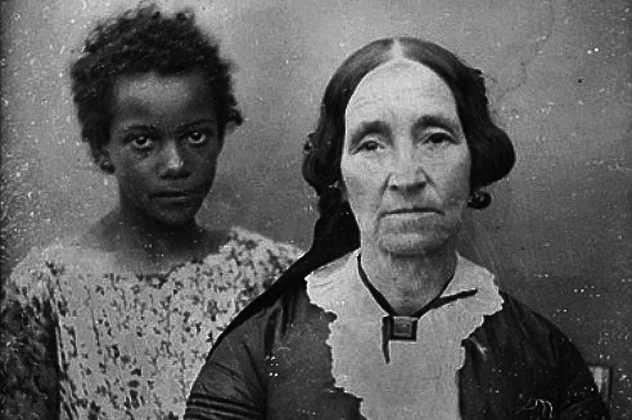
What I found sinister as well as ingenious was how white wealth was held in the families. The female would get the slaves and the sons would get the land, that way when they moved on and married other people it was a match made in heaven, she had the slaves to work the land she just married into.
White women were very much a part of slavery and all its dealings. However; we have been programmed to believe that white women were innocent  when it came to slavery and that they were not aware of “men folks business.”
On the contrary, many were being groomed into being successful slave mistresses, just as their counter-parts.


From the book: They Were Her Property: White Women who were Slave Owners in the American South, many slaves were giving to white women as wedding gifts…one slave recalls that one of his owners gave his daughter “50 niggers as a gift…”
I find it interesting that early on during slavery… black women were discourage in having children; because it took away from their “white women bearing children…”, but in 1808 when slavery became illegal from Africa. That law drastically effect white folks income…therefore the prize was child-bearing enslaved females, so they could now breed and begin to record those unions and off-springs…


Slave owning females are recorded forcing their female slaves to have sex with different black men…it did not matter whether that black female was “married.”
One of the many stories of white slave owning women was that how one- started with 30 slaves; however within 10 years she had over 100 all she created mixing and matching black men or any other ((white)) man that paid “the right price” impregnating her “good-nigger gals…”  One slave recalls hearing his white slave owner saying “she wouldn’t depart from her favorite breeding nigger girl for no amount of money!…”

                    Because white women had loss their legal rights to their goods…if there was not a legal letter stating that their property was solely theirs before they got married. When I women got married she was called a “feme covert” or married woman. Many white women fathers would leave wills stating that they gave slaves to their daughters to use at their own well and not to be included with their husbands property…that way this legal paper protected their daughters property from her (future) husband(s) misfortunes… because many white men did lose a lot of their belongs and the creditors would sometimes try and take their wives property for payment.
Even though white woman had some restrictions, they at least had the opportunity to have their voices be heard thru the courts, without fear of being killed, raped or their husbands being mutilated for speaking up.
                   
         It was also believed that enslaved peoples didn’t understand what was going on around them, this is a myth: according to the recordings left by freed and former slaves “they were very aware…” what their owners** were doing; considering it was them that was being sold. Many enslaved people also knew what would happen if their owners died with NO will(s) and the risk of being sold to someone else.

                    White women were often at odds with their mates, even though they had some say when their husbands fucked up, they also wanted some form of protection (law) and would often fight for it. Also, white women did not like their husbands very much, and I feel that most white women got married because of their religious beliefs, but more so for social status. And they reproduced with these men only because they both were on the same understood, that nothing was in their way in creating wealth and a legacy.

Yet black people did not have this luxury. We were shipped here together; as a collective, as one unit. We are in this fight together, there is no individual success story, even with white families today; as well as the past, and there was not just one individual that was successful. It was a network, a joint effort to make sure that the wealth stayed in the family…and they made sure that every slave they owned-that those descendants of those slaves-they owned as well.


My thoughts and understanding on the Book: They Were Her Property
A  ADOS book club selection.

**slaves did not refer to their owners as “master”

Monday, November 18, 2019

Giving aid to cause-ADOS

Since I’ve been studying this “new” political path, it is hard to disgust that fact that so many Ados people are fighting so hard against reparations-redress and trans-formative policies. 

These people I speak of are the ones that have a blue check on twitter and some work for major media outlets.

I assumed that if they listened to Yvette Carnell* and Antonio Moore** and what the data shows, understanding that they are not just “lip” service…and with the information that they share would begin their own research on the topic and why the racial wealth gap happened and what you can do politically in your local community by changing individuals (that happen to work in the government), with the data and information one has collected. And that being in front of a "specific" cause does help in making change(s) for your community. Ados message has always stressed the importance of having black politics in your daily life.


My thought is they have to stay “willfully ignorant” in order to keep the positions they are in.
These people are in “high positions” because they were chosen to be there.

      Recognizing that does not diminish the hard work and dedication one did to achieve their goals.
It is just the owners of these platforms they work for, can decide to take all that away…just because you are no longer needed.

You (micro) have no protections. (This is where the government comes in). Ados (macro) are demanding protection(s) for us ALL. IN turn will help you (micro) be protected.
I don’t understand how any of this advocacy- “giving aid to cause” harms them…

Unless… they are afraid…


SN: the current protection laws that were supposed to protect us from discrimination have been flatten or outright gutted, and if you have a case you will need capital to hire an arbitrator to take the case on your behalf…

*Yvette Carnell is a political commentator and has work for the democrat party for many years.

**Antonio Moore has been a Defense attorney in Los Angles Ca. for over 10 years.


Our Allies...Paul Sower...

Sunday, November 10, 2013

~Colorized Vintage Photos~


I love vintage photography and came across these black and white photos that were colorized by Brinkman87.
There are more on his website, however these are just a few that are my favorites.

Charlie Chaplin at the age of 27, 1916

Auto Wreck in Washington D.C, 1921


‘Old Gold’, Country store, 1939


Monday, February 20, 2012

Black History My History (Edward Roye)


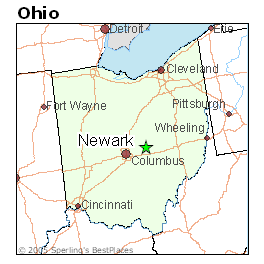
Liberia's Fifth President, President Edward Jenkins Roye. Edward Roye was born into a prosperous family in Newark, Ohio. He immigrated to Liberia in 1846 and set up business as a merchant. In 1849, Roye became active in Liberian politics, rising to the position of President of the Republic in 1870. Roye took office in the midst of a fiscal crisis and was ultimately ousted by his opponents in 1871.


More than 160 years ago, two members of the board of trustees of the town of Newark, Ohio met and issued an order that all Negroes should leave within twenty-four hours. A constable was sent out to the black community to inform them of the order of banishment. A young black boy ran to the home of the third member of the board of trustees, A.E. Elliot, begging him to use his influence to circumvent the order. Elliot, his son, and Eddie Roye, went along to the Square where a large crowd had gathered, both blacks and whites. The entire Negro population was pleading that they should not be driven from their homes. Elliot did use his influence; he protested that such hasty action would create hardship on the people involved. His arguments proved effective and the order was postponed until it could be given more consideration. The postponement became indefinite and was never brought up again.
Trustee Elliot went about his affairs as usual, but young Eddie Roye must have walked away from the Square with a determination to find a land with freedom for "men of color."


The history of Edwards J. Roye and the history of Newark begin at about the same time. In 1810, just eight years after Newark was founded and surveyed, John Roye is recorded as having purchased a lot on the south side of the Square. Roye, said to have been born in slavery in Kentucky, came north with his wife Nancy and became a prosperous land owner. Their son, Edward J. Roye was born in a little house on what is now Mount Vernon Road on Feb. 3, 1815. He was educated in Newark schools, but nothing much is known of his early years. In 1822, his father sold his Newark property and went to Illinois, leaving Edward and his mother behind. A letter dated April 14, 1829, from John Edward Roye, is in the Vandalia Illinois courthouse. The letter beginning, "Dear Son," leaves all the property John Roye had acquired in Illinois to his son Edward.


Several biographers say Edward Roye became a barber, which was acceptable occupation for a black at that time. Newark did not have a white barber until 1856. By the year 1832, Edward Roye had left his hometown and was enrolled in Ohio University in Athens. He went on to teach school at Chillicothe in 1836 and after that he moved to Terre Haute, Ind., where he opened that city's first bathhouse/barbershop next door to the best hotel.

By the time Nancy Roye died and was buried in the Sixth Street cemetery in 1840, the mood of the country was changing. Colonizationists wanted to remove all blacks and send them to Africa. Whether due to changing in climate of the 1840's or to the scene around the Square that day in his childhood, Edward Roye decided to leave the United States for an African country, Liberia. On May 1, 1846, Roye sailed from New York and one month later landed in Monrovia.


His energy and intelligence soon made him a leading merchant and after acquiring great wealth, he returned to the U.S. on his own ship. It is said he visited Newark where he was entertained at a banquet for an event for Thomas Ewin, adoptive father of William Tecumseh Sherman.

Years later Roye became chief justice, speaker of the House, and finally, president of Liberia in 1871. He began a program of reconstruction for his nation intending to build new roads and schools.


For these purposes he needed money. Roye sailed for England where he began negotiations with London banks. The results proved ruinous, the terms of the loans were severe, among other things carrying an interest of 7 percent. Roye hastily agreed without consulting the legislature. Liberia actually received about $90,000, while bonds were issued for $400,000.


The whole affair caused great resentment against him, and when he returned home he was accused of embezzlement. He then tried to extend his two-year term of president by edict, after the people rose up against him.
In October 1871, Edward J. Roye was deposed from office., He was brought to trial, but escaped in the night . His is believed to have drowned while trying to reach a English ship in Monrovia harbor, on Feb. 12, 1872.

After many years the nation of Liberia has taken another look at their fifth president. A building housing what was the True Wig Party headquarters is named in his honor, as well as a ship, a town, and several schools.


The Ohio Historical Society refers to 
Edward James Roye as the "Ninth and Forgotten President from Ohio." 
While in a land far away from the 
"land of Legend" 
he is known by some as the "Lincoln of Liberia." 


More Info


Sunday, February 19, 2012

Black History My History 5 (Candombe)

Candombe


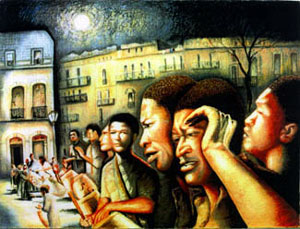
Marie Trigona  writes in her article, "Uruguay Spirit of Afro Resistance Alive in Candombe" from Upside Down World, Marie Trigona (a writer, radio producer and filmmaker based in Buenos Aires) reports: In the streets of Montevideo, Uruguay, Afro-Uruguayans celebrate an often-ignored part of their history - Candombe and resistance. For more than 200 years Afro descendants have maintained the tradition of Candombe, a rhythm that traveled from Africa to Uruguay with African slaves. The music carries centuries of resistance and liberation.


The word Candombe literally means "place and dance of Africans." The musical tradition evolved during the colonial era. Africans brought to Uruguay for slave labor used the rhythm of the tambores, or drums, to communicate with each other and defy colonialists.
Today the music thrives in Montevideo's working class neighborhoods, where African descendants have kept alive the tradition of the Llamadas, parades where Candombe is played. Candombe drummer Mitchel Navos says that Candombe didn't originate in Africa, but with Afro-descendants in Montevideo. "Candombe is specifically from Montevideo. Candombe like Montevideo's Candombe doesn't exist in any other part of the world." He also asserts that Candombe's spirit has been passed down for generations despite a historical void surrounding the music's origins.


Origins of Candombe


Montevideo's colonial district is the birthplace of Uruguay's Candombe music. Africans from the Southern and Western regions (Bantú regions which include Congo, Angola and Mozambique) were brought to Uruguay and Argentina through the slave trade beginning in 1750. "Africans arriving from the Bantú region brought with them the Candombe rhythm," explains Navos. "Being from different nations and regions, they didn't have the possibility of communicating through language."

In whatever time their white masters allowed, slaves communicated through drums and dance. The first Llamadas took place at this time. Some historians assert that the word Llamadas - "parade of calls," refers to the drums Africans played to call out to each other in their homes. Each tribe had a particular rhythm that could be identified from afar.
Within these living quarters, African musicians gave birth to a rhythm and tradition which has been passed on for generations. Martin Silva is a young musician from Montevideo's Barrio Sur. His grandparents taught him the Candombe rhythm and the origins of Candombe. "Before the llamadas were held in Ansinas, which was a conventillo or a housing complex here on Isla de Flores and nearby streets. It was a huge housing complex where hundreds of families lived. The llamadas were held there, they paraded inside. It was a different kind of festivity. It's not the same as today."


Upper class whites tried to ban Candombe gatherings in the 19th century. One of the earliest historical documents tracing Candombe music is an 1808 police record, when citizens of Montevideo requested that these dances be severely repressed and completely prohibited. Afro descendants took their music underground, to defy the oppressive conditions of slavery.

"We can't refer to anything before 1900 with historical certainty," explains Navos. There exists an extensive historical void regarding Candombe practices between 1800 and 1900. "What exists today is what we could hide and preserve, which has led to the transformation of Candombe in what it is today, from generation to generation," he continues.


"Barrio Sur and Palermo were where the meat curing plants were located. Many of the black slaves had to work in the meat curing plants, but also many lived in the curing plants. That's where music from Africa mixed with Catholicism." Many historians assert that the first Llamadas took place in clandestine music halls, until they went public with the abolishment of slavery in the late 19th century. "The first Llamadas held was a procession from the Meat curing plants toward Montevideo's main cathedral, in the Old part of the city. In commemoration of Day of the Kings, they made a procession to give a tribute to the Catholic Saints of the Masters. That's when Western Traditions got mixed in. That's when the term Llamadas, or walking procession, came to be. Before it wasn't about walking in the streets, it was held in a hall or like a band performance."


The dance and music are filled with symbols of African descendants' painful past. The troupes the perform the Llamadas are called comparsas, and are made up of cuerdas (drummers) and dancers. The drummers walk very slowly, barely separating their feet as they walk. This rhythm and style of procession is meant to symbolize Afro-descendants' past and historical roots when their ancestors were made to walk with chains and shackles.


Three main characters lead the llamadas: the Mama Vieja (Grandmother), Gramillero (Old Doctor), and Escobero (Wizard). The Gramillero walks with a cane as if he's about to fall over. The Mama Vieja carries an umbrella attending to the Grammillero. The Escobero sweeps the ground with a great baton.

Navos describes the significance of these three characters. "The Escobero, I don't know if he's a magician or wizard, he's the person in charge of taking charge of the spirit of the comparsa. The Escobero walks in front of the flags to clean the bad spirits opening the way for the comparsa."


 The Gramillero and Mama Vieja symbolize two key figures in Afro-Uruguayan history: the old doctor who uses medicinal herbs to cure and the grandmother, the matriarchal figure. Navos explains the significance of those characters. "Those characters are as important to us as our grandparents. In a family they are the roots. They are the oldest people in the comparsa. Their dance is about that. Simulating the pain in their slow dance, there's an expression of fatigue in their dance."


Some of the city's Candombe troops feature more than 50 drummers and dozens of dancers. Each neighborhood has its own rhythm and style. In Barrio Sur, where slaves took the music underground in the 19th century, new Candombe troops are emerging today.


According to Mario Suarez a young musician playing a traditional African drum in the Isla de Flores comparsa, the Llamadas is more than a performance. "The Llamadas and Candombe for the Afro descendants are a passion and a tradition. We have to maintain the tradition. The identity of the comparsa of Isla de Flores is strong, because it's part of the identity barrio Ansinas and Barrio Sur. The first Llamadas took place here in the barrio Ansinas and the barrio Sur."


Today Afro-Uruguayans number around 100,000, or about 6 percent of the population. For many Uruguayans of Afro descent, Candombe is part of everyday life and resistance in a continually discriminating society. The Llamadas ispracticed all year long, not just during Carnival. Uruguayans have also adopted the increasingly popular Candombe music as part of their national identity. Especially in the past 30 years, the music has influenced White musicians. The music was used to express resistance to the repressive regime during Uruguay's bloody military junta from 1973-1984. Today, Candombe isn't just heard in Montevideo but has spread to Uruguay's interior and echoes in Argentina.

"Candombe is not only a question of skin color, it's a way of thinking and being," says Diego Bonga Martinez from the Afro-cultural movement in Buenos Aires. In Buenos Aires, the Llamadas have been continually repressed by police and government officials. Martinez adds, "Candombe is a cultural weapon we have used to defend ourselves with, for our culture to live on." From the size and sound of the growing number of comparsas participating in the Llamadas in Montevideo, this tradition will be passed on for generations to come.




Black History My History 4


Slave Grown Cotton in a Global Economy: Mississippi (1800-1860)

Mississippi History Now published an article in 2006 entitled, "Cotton in a Global Economy: Mississippi (1800-1860)," by Eugene R. Dattel that states, "William Faulkner, Mississippi’s most famous novelist, once said, “To understand the world, you have to understand a place like Mississippi.”


To the world, Mississippi was the epicenter of the cotton production phenomenon during the first half of the 19th century. The state was swept along by the global economic force created by its cotton production, the demand by cotton textile manufacturing in Europe, and New York’s financial and commercial dealings. Mississippi did not exist in a vacuum. So, in a sense, Faulkner’s words could be reversed: “To understand Mississippi, you have to understand the world.”

Mississippi’s social and economic histories in early statehood were driven by cotton and slave labor, and the two became intertwined in America. Cotton was a labor-intensive business, and the large number of workers required to grow and harvest cotton came from slave labor until the end of the American Civil War. Cotton was dependent on slavery and slavery was, to a large extent, dependent on cotton. After emancipation, African Americans were still identified with cotton production.
This particular chapter of the story of slavery in the United States starts at the Constitutional Convention of 1787 in Philadelphia, Pennsylvania. When the delegates wrote and agreed upon the Constitution, cotton production was virtually nonexistent in America. There were approximately 700,000 slaves in the United States at the time of the signing of the Constitution. The slave states of South Carolina and Georgia were adamant about having slavery protected by the Constitution. Connecticut’s Roger Sherman, one of the delegates who brokered the slavery compromise, assumed that the evil of slavery was “dying out … and would by degrees disappear.” He also thought that it was best to let the individual states decide about the legality of slavery. Thus, the delegates faced the question: should there be a United States with slavery, or no United States without slavery? The delegates chose a union with slavery.


Soon after the signing of the Constitution, cotton unexpectedly intervened in the 1790s and changed the course of America’s economic and racial future because of the simultaneous occurrence of two events: the mass production of textiles and the mass production of cotton. In the late 18th century, the process started in Great Britain where several inventions — the spinning jenny, Crompton’s spinning mule, and Cartwright’s power loom — revolutionized the textile industry. The improvements allowed cotton fabrics to be mass produced and, therefore, affordable to millions of people.


At the same time, Eli Whitney, a twenty-eight-year-old unemployed recent graduate of Yale University, journeyed to the South to become a tutor on a plantation. He soon became obsessed with the bottleneck in cotton production on his employer’s Georgia plantation. In 1793, the fledgling mechanic soon found a solution to the problem of cleaning cotton and the separation of the seed from the fiber. After a few months, he wrote the now-famous letter to his father in which he described his discovery: “I involuntarily happened to be thinking on the subject [of cleaning cotton] and struck out a plan of a Machine [to remove the cotton seed]…I concluded to relinquish my school and turn my attention to perfecting the Machine.” That machine was the cotton gin.


Whitney gave up his career as a teacher to devote full time to manufacturing cotton gins and making money. Sadly for Whitney, the cotton gin generated no profits because other manufacturers copied his design without paying him fees. He had obtained a patent on the cotton gin but it proved to be unenforceable. Whitney’s priorities, henceforth, were money and manufacturing. Whitney never seemed, as one historian noted, to care about slavery “one way or the other.”
Whitney is given credit for unleashing the explosion of American cotton production which was, in turn, propelled by the seemingly insatiable appetite for cotton from the British cotton textile mills. A quick glance at the numbers shows what happened. American cotton production soared from 156,000 bales in 1800 to more than 4,000,000 bales in 1860 (a bale is a compressed bundle of cotton weighing between 400 and 500 pounds). This astonishing increase in supply did not cause a long-term decrease in the price of cotton. The cotton boom, however, was the main cause of the increased demand for slaves – the number of slaves in America grew from 700,000 in 1790 to 4,000,000 in 1860. A materialistic America was well aware of the fact that the price of a slave generally correlated to the price of cotton. Thus, the cotton economy controlled the destiny of African slaves.


Eugene R. Dattel,
 a Mississippi native and economic historian, is a former international investment banker. His first book, The Sun That Never Rose, predicted Japan's economic stagnation in the 1990s. His next book, Cotton and Race in America (1787-1930): The Human Price of Economic Growth, will be published in 2007. (Posted October 2006 in the Mississippi Now).


Quotes

Show me someone who never makes a mistake and I'll show you someone who never does anything.